
Embedded hardware systems across commercial transport, industrial robotic cells, and smart infrastructure demand high computational throughput paired with deterministic input-output control. Designing multi-node boards requires balancing tight bill-of-materials budgets against the strict processing latency required by modern supervisory software.
Integrating dedicated peripheral channels with real-time digital filtering frequently challenges hardware developers evaluating off-the-shelf silicon platforms. Choosing reliable controller silicon simplifies board layout, eliminates redundant coprocessors, and accelerates development schedules for competitive commercial equipment manufacturers.
Functional Safety Partitioning Alongside Silicon from Car Semiconductor Companies
Automotive system development may involve ISO 26262 functional safety requirements, while AEC-Q100 addresses reliability qualification for automotive integrated circuits. Primary vehicle dynamic systems such as traction inverters, steering controllers, and autonomous braking arrays mandate specialized automotive silicon built with dual-core lockstep redundancy and integrated hardware error correction.
Established car semiconductor companies engineer specialized microcontrollers specifically to isolate hazardous system faults across primary vehicle electronics. Chipmakers such as Infineon, NXP, Renesas, and STMicroelectronics focus automotive product roadmaps on functional safety ratings spanning ASIL-B through ASIL-D across extreme under-hood operating environments.
Automotive-adjacent architectures, however, present distinct functional requirements where secondary electronic control units do not directly manipulate dynamic safety systems. Telematics monitoring gateways, electric vehicle charging wallboxes, fleet tracking terminals, and auxiliary climate controllers operate effectively using ruggedized industrial processing silicon rather than costly safety-certified automotive processors.
Hardware architects frequently pair companion front-ends manufactured by car semiconductor companies with robust general-purpose microcontrollers. Connecting specialized automotive power management integrated circuits and high-side driver arrays to versatile industrial control silicon creates cost-effective electronic sub-assemblies without compromising long-term field dependability.
Deterministic Computing and Embedded Storage Execution on the Cortex-M4 Platform
Specifying the STM32F407VET6 High-performance 32-bit Microcontroller (MCU) gives engineering teams an established 168 MHz computing engine built around the 32-bit Arm Cortex-M4 architecture. Delivering 210 DMIPS of raw processing performance, the integrated single-precision floating-point unit and hardware digital signal processing instructions accelerate complex vector control algorithms.
Executing high-speed numerical calculations requires deterministic memory access to eliminate unpredictable interrupt latency. Integrating 512 KB of high-density flash memory alongside 192 KB of SRAM, the silicon architecture features 64 KB of dedicated core-coupled memory data RAM linked directly to the processor core via private buses.
Zero-wait-state code execution through core-coupled memory guarantees immediate interrupt handling during critical fault detection events. Eliminating bus contention across shared memory matrices ensures that rapid motor commutation routines and high-frequency digital filter calculations execute within strictly predictable clock cycles.
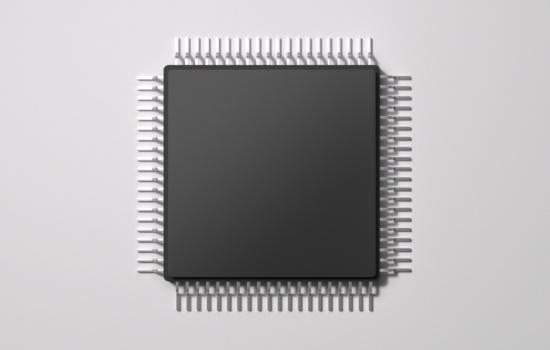
Silicon packaging utilizes a compact 100-pin LQFP footprint measuring 14×14 mm, exposing up to 82 multi-function general-purpose I/O pins. Maintaining stable operational performance across industrial supply rails between 1.8 V and 3.6 V, the device tolerates ambient operating temperatures spanning -40°C to +85°C.
Real-Time Fieldbus Translation and High-Speed Mixed-Signal Interfacing
Modern industrial automation setups and vehicle communication hubs depend on robust physical fieldbuses to exchange operating state variables across distributed nodes. External transceiver ICs protect sensitive digital lines against harsh electrostatic discharges, inductive load switching spikes, and substantial ground potential shifts present across extended cable runs.
Dual integrated CAN 2.0B active controllers enable simultaneous message transmission across separate network segments without overburdening central processing registers. Configurable hardware acceptance filters reject non-critical network traffic automatically, reserving processing bandwidth for mission-critical command structures during peak communication intervals.
Bridging physical field data to enterprise platforms relies on an integrated 10/100 Ethernet MAC supporting reduced media-independent interface connections. Protocol translation routines ingest raw CAN bus packets, bundle sensor payloads into standard TCP/IP structures, and route diagnostics to local edge servers or remote monitoring interfaces.
Analog conversion capabilities leverage three independent 12-bit analog-to-digital converters achieving combined sampling speeds up to 7.2 MSPS in interleaved configurations across 24 channels. Paired with dual 12-bit DACs and seventeen hardware timers, the controller orchestrates precise pulse-width modulation synchronized with sub-microsecond current monitoring.
System designers adopting the STM32F407VET6 High-performance 32-bit Microcontroller (MCU) capitalize on rich peripheral integration including three SPI channels, three I2C interfaces, and six UARTs. Extensive communication options allow simultaneous interfacing with cellular modems, satellite positioning chips, and local display panels without adding discrete external bridge controllers.
Supply Assurance and Authorized Sourcing for High-Mix Manufacturing
Managing production continuity requires proactive inventory planning to navigate unpredictable semiconductor lead-time variations and global allocation waves. Electronics manufacturing service providers and original equipment manufacturers must establish trusted supply channels to prevent unverified active components from infiltrating automated assembly pipelines.
By distributing a diverse range of electrical components, Unibetter assists businesses in keeping regular output schedules in the commercial vehicle, automation, and telematics industries. Sourcing experts keep a close eye on component lifespans, production timelines, and worldwide availability patterns to safeguard active surface-mount assembly lines from unforeseen factory allocations.
To ensure 100% genuine, quality-assured, and brand-new electrical components, Unibetter sources and procures them from franchised sources. Each integrated circuit is thoroughly tested and certified to comply with the original electrical requirements before assembly through stringent chain-of-custody documentation, thorough inbound inspections, and traceability.
Crucially, the brand’s service strength is supporting customers to locate needed electronic components and acquire them at lower costs. Combining deep component cross-referencing capabilities with verified global procurement networks allows purchasing departments to bypass volatile spot-market pricing premiums while securing genuine parts for continuous volume builds.
Collaborating with Unibetter equips industrial manufacturers with strategic buffer stock management and end-of-life replacement strategies. Experienced component specialists assist engineering teams in qualifying functional alternatives, preventing sudden factory discontinuations from forcing costly printed circuit board revisions or delayed product shipments.
Aligning high-throughput processing silicon with resilient procurement channels forms the cornerstone of competitive electronic product development. Combining capable 32-bit hardware execution with verified franchised distribution empowers engineering and purchasing leaders to achieve exceptional equipment reliability, cost efficiency, and unbroken manufacturing continuity.