
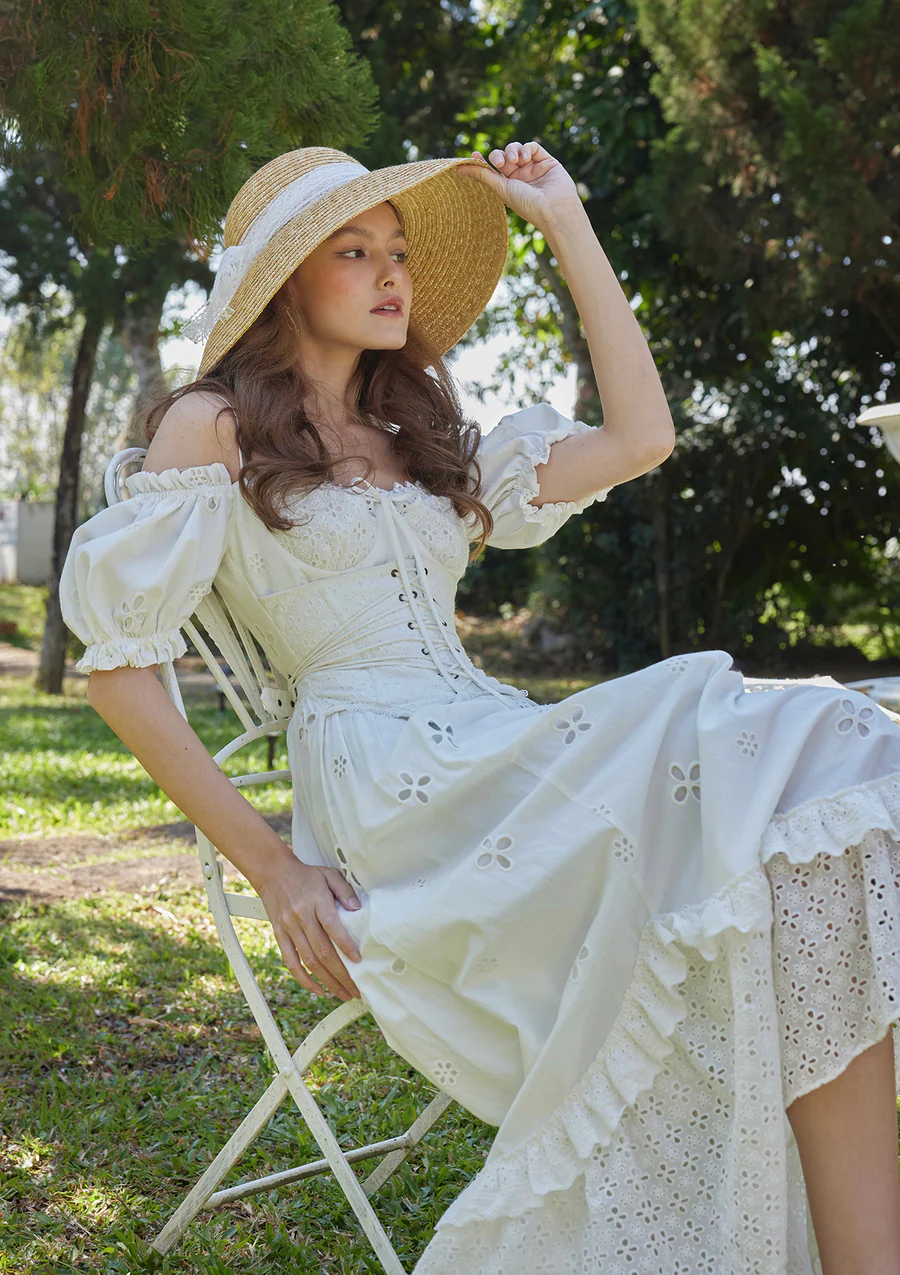
In recent years, vintage cottagecore dresses have become an important part of contemporary fashion discussions. Their popularity reflects more than a preference for soft silhouettes or pastoral aesthetics. These garments connect fashion with historical craftsmanship, textile traditions, and artistic expression. Inspired by rural European clothing, romantic literature, and handmade decorative arts, vintage cottagecore dresses represent a careful balance between nostalgia and modern design.
Fashion brands have increasingly explored this intersection between art and clothing. Among them, LaceMade has introduced designs that reinterpret historical dress elements through modern tailoring. Pieces such as the “I Flipped” White Cottagecore Dress demonstrate how artistic construction techniques can be adapted for contemporary wear while preserving cultural references associated with cottagecore fashion.
Historical Design Elements in Modern Fashion
The appeal of vintage cottagecore dresses is closely tied to their use of historical design details. Many dresses incorporate gathered fabrics, lace trims, corset-inspired waists, and flowing skirts that recall nineteenth-century rural clothing and romantic portraiture. These features are not simply decorative; they reflect traditional garment-making practices that emphasized structure, durability, and hand-finished craftsmanship.
The “I Flipped” White Cottagecore Dress provides an example of this approach. Its bodice includes gathered pleats with adjustable ties that create a flexible neckline fit. This detail resembles techniques historically used to adapt garments to different body shapes while maintaining comfort. The faux two-piece waistband, combined with crisscross lacing and metal eyelets, also references historical corsetry without reproducing its restrictive structure. Through these details, vintage cottagecore dresses integrate artistic and historical influences into wearable modern fashion.
The Cultural Meaning Behind Cottagecore Aesthetics
The cultural significance of vintage cottagecore dresses extends beyond appearance. The cottagecore movement often reflects a broader interest in slower living, handmade objects, and a closer relationship with nature. In fashion, this has encouraged appreciation for embroidery, textured fabrics, and garments designed with visible craftsmanship rather than mass-produced uniformity.
At the same time, these dresses serve as a visual connection to artistic traditions found in painting, literature, and costume history. Soft color palettes, layered fabrics, and romantic silhouettes resemble imagery associated with pastoral art movements. As a result, vintage cottagecore dresses function not only as clothing but also as expressions of cultural memory and artistic identity.
Fashion as a Reflection of Artistic Heritage
The continued popularity of vintage cottagecore dresses demonstrates how fashion can preserve artistic traditions while adapting them for contemporary lifestyles. Through historical references, structured tailoring, and handcrafted details, these garments connect modern consumers with cultural aesthetics rooted in art and craftsmanship. By incorporating thoughtful construction elements into modern collections, brands such as LaceMade show how fashion can remain visually expressive while maintaining historical awareness and practical wearability.